
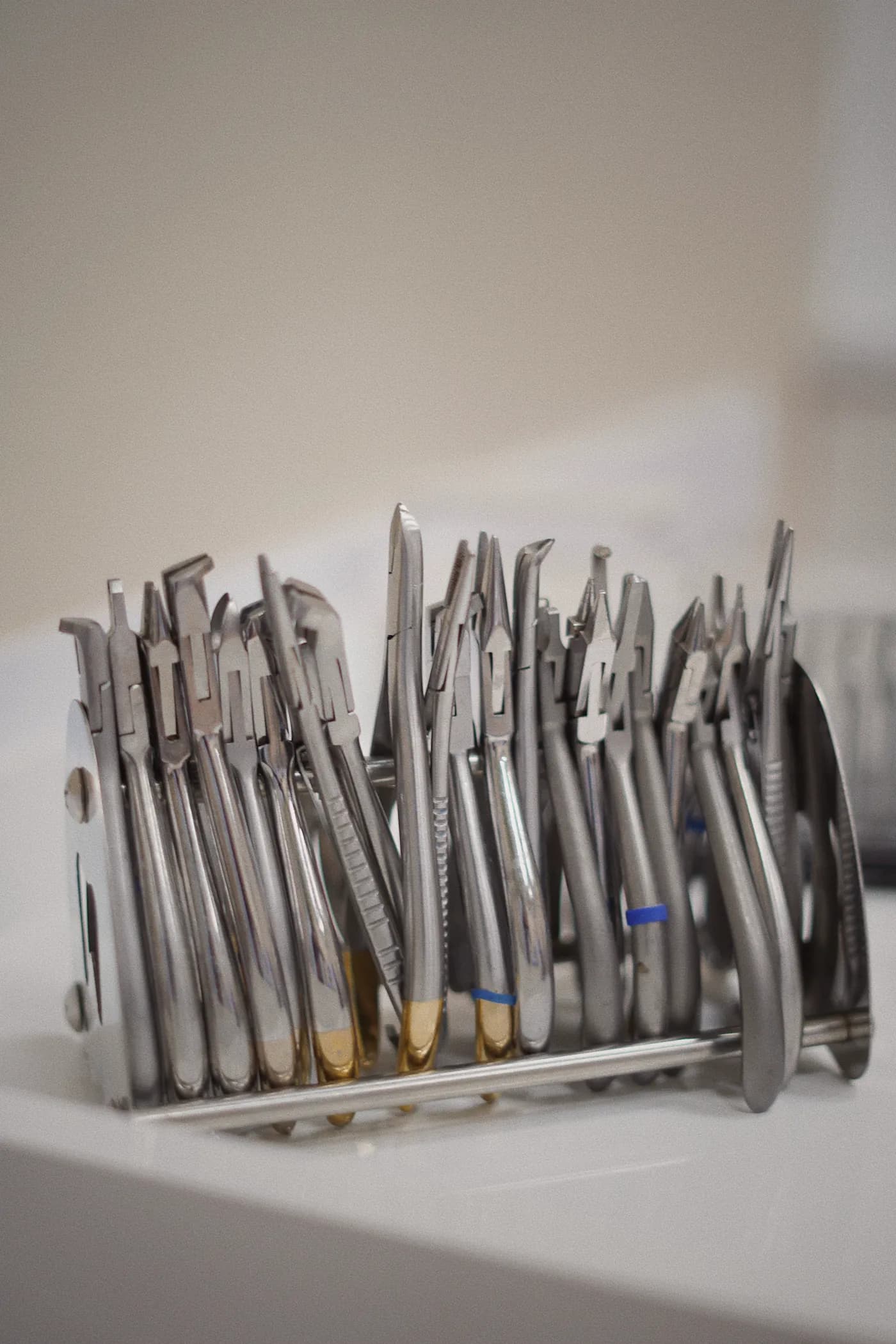
Biocompatible materials
Titanium and zirconia implants integrate with the bone naturally and permanently. We choose the material with you according to your case.
Advanced dentistry · Valencia
Advanced dentistry · Valencia
At our implant clinic in Algirós, next to Blasco Ibáñez avenue, we place titanium and zirconia (metal-free) implants, with immediate loading when your case allows it and, when all the teeth are missing, a fixed full-arch denture on implants. Treatment usually takes 3 to 6 months over several appointments: diagnosis and 3D planning, surgery under local anaesthetic, healing check-ups and the final crown. An implant is a small artificial root that replaces the root of the lost tooth and holds a natural-looking crown. Your first visit, with a diagnosis, is free of charge.
We plan it with the Fontes Method: a full assessment, digital design, and you see the expected result before we start.
Content reviewed by Dr Carmen Fontes, dentist and clinical director (registration no. 46004101) · Updated on
The implant itself is a small titanium or zirconia root, shaped like a screw, that fuses with the bone. When people talk about “screwless implants” they almost always mean something else: how the crown, the visible tooth, is fixed onto the implant. There are two ways: screw-retained or cemented.
A screw-retained crown is held by a small internal screw whose access hole is sealed with tooth-coloured composite, so it cannot be seen. Its great advantage is that it can be removed to clean or repair it, or to check the gum, without damaging anything. A cemented crown has no access hole, but it is harder to remove and any cement left under the gum can cause inflammation.
At our clinic we use screw-retained crowns: they can be removed to check the gum and the implant, which makes maintenance easier and protects the implant in the long term, without compromising appearance. We plan the implant position with a 3D scan with that goal in mind.
Immediate loading means fitting a fixed temporary tooth on the day of surgery, or within hours, instead of waiting several months without a tooth. You leave the clinic with a complete smile while the implant integrates with the bone.
The process is: first visit with 3D diagnosis and digital planning; surgery under local anaesthetic, during which we measure the implant’s stability; fitting of the fixed temporary tooth; a few months of healing on a soft diet; and finally the permanent crown.
It is not always possible. The implant needs enough stability when it is placed, good-quality bone and no active infection in the area. If the stability is not right during surgery, the safest option is to let the implant heal first, and we fit a temporary solution. When there is not enough bone, bone regeneration techniques can help.
Zirconia is a white, high-strength ceramic used as an alternative to titanium for the implant root. Both materials are biocompatible and integrate with the bone; what differs is where each performs best, which is why we place both and choose with you according to your case.
A zirconia implant makes most sense for front teeth, when the gum is thin and the grey of titanium could show through, and for people with a documented sensitivity to metals or who prefer metal-free treatment. Titanium remains the most predictable option where chewing forces are high: molars, several implants in a row, full-arch restorations or severe teeth grinding.
Planning is the same as with titanium: a 3D study of the bone, a position calculated before surgery and several weeks of integration before the permanent crown. At your first visit we explain which material we recommend for you and why, with the advantages and limits of each.
When all the teeth in an arch are missing, you do not need one implant per tooth: a complete denture that does not come out is fixed onto several implants, usually four or six, unlike a removable denture. If the bone allows it, a fixed temporary denture can be fitted on the same day (All-on-4). We explain the options, materials and care in detail at your first visit.
Clinical process
Day 1 · Assessment
A full digital diagnosis with a cone beam CT scan to assess bone quality, the position of nerves and the space available for the implant.
Week 1 · 3D design
Virtual design of the implant, its angle and the final crown with 3D planning software. You see the expected result before surgery.
Week 2 · Implant
Precise placement of the implant under local anaesthetic, following the digital plan. A minimally invasive, controlled procedure.
Months 2–4 · Bone healing
The implant fuses with the jawbone over 8 to 16 weeks, depending on the protocol. The most important wait of the process.
Months 4–6 · Restoration
Digital impressions and a permanent porcelain or zirconia crown, screwed onto the implant: precise, natural-looking and easy to maintain.
Yearly · Maintenance
An annual X-ray and gum check around the implant, part of the clinic’s maintenance programme, to keep it healthy for the long term.
Why choose us
Dr Carmen Fontes combines 3D diagnostic technology with years of clinical experience to plan every case in our Valencia clinic.
Titanium and zirconia implants integrate with the bone naturally and permanently. We choose the material with you according to your case.
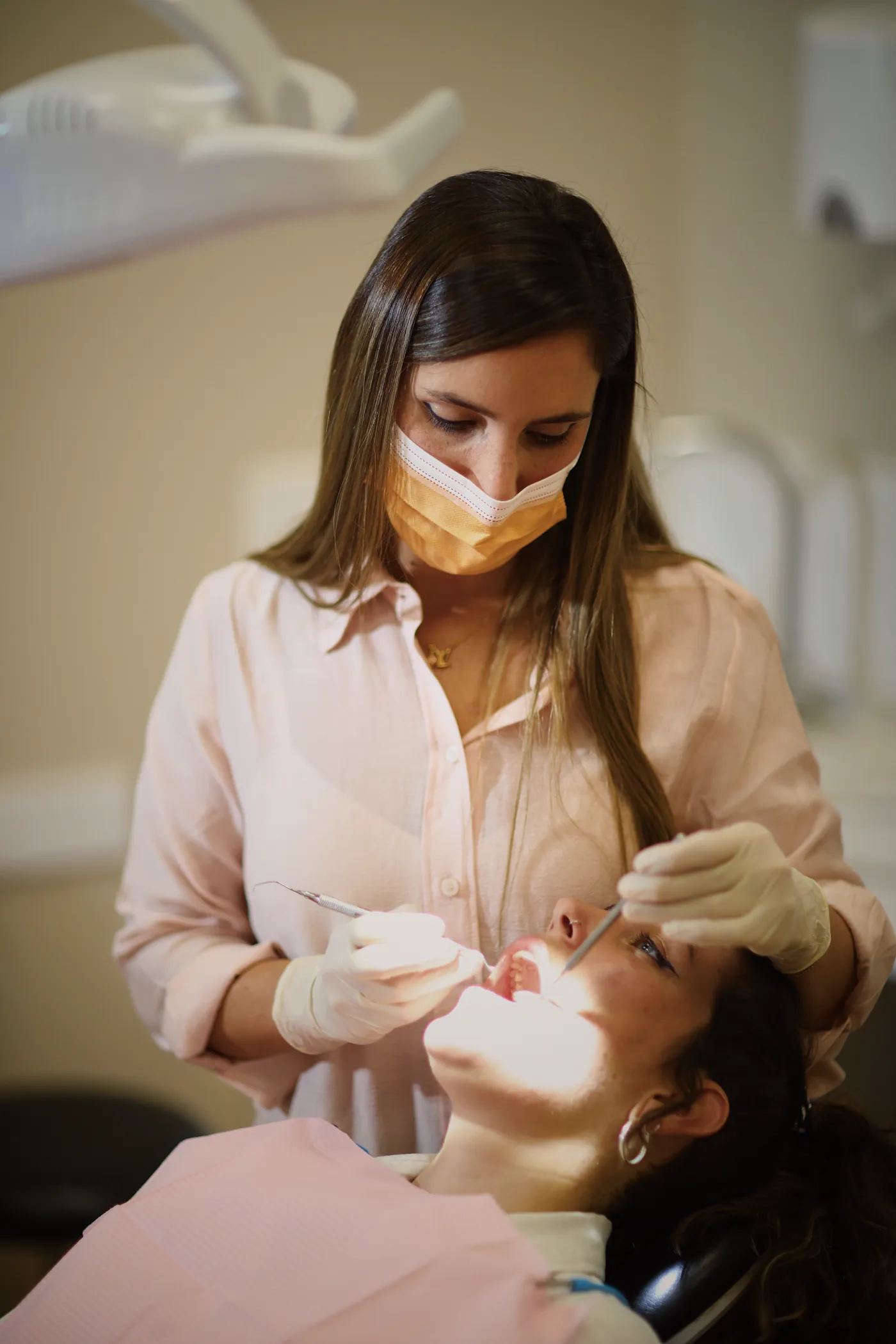
The permanent crown is designed to match your other teeth in shape, colour and translucency.

With proper care, an implant can last for decades, without having to file down the neighbouring teeth as a bridge does.
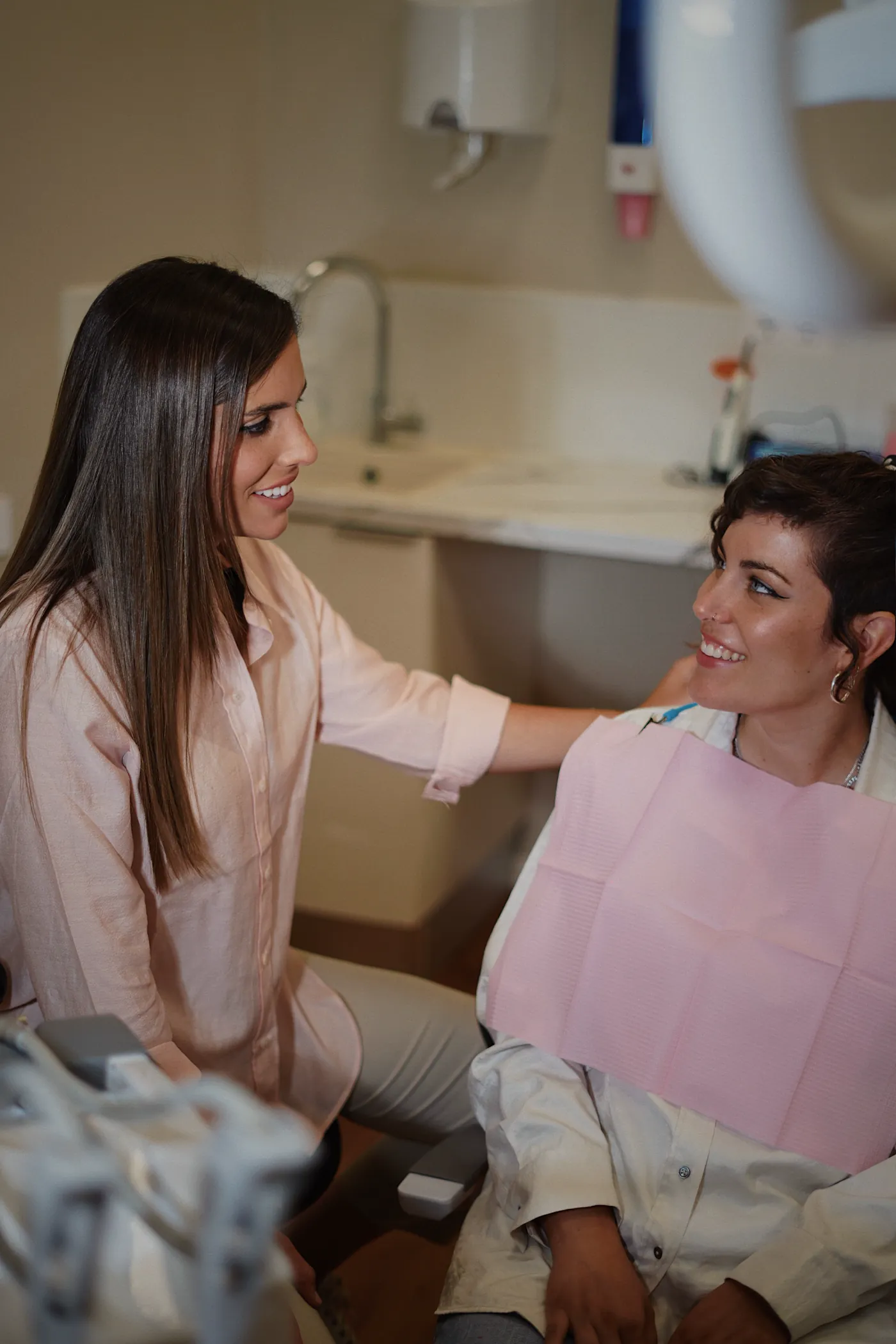
Chew, speak and smile with confidence, without a removable denture moving around.
Chewing stimulates the jawbone through the implant, which slows the bone loss that follows losing a tooth.
We study your case with a cone beam CT scan and planning software before surgery, for safety and predictability.
Titanium and zirconia implants integrate with the bone naturally and permanently. We choose the material with you according to your case.
The permanent crown is designed to match your other teeth in shape, colour and translucency.
With proper care, an implant can last for decades, without having to file down the neighbouring teeth as a bridge does.
Chew, speak and smile with confidence, without a removable denture moving around.
Chewing stimulates the jawbone through the implant, which slows the bone loss that follows losing a tooth.
We study your case with a cone beam CT scan and planning software before surgery, for safety and predictability.
Hover over each panel to find out more

Founder & Clinical Director
15,000+ patients treated
Meet the dentist
Dr Carmen Fontes personally oversees every treatment plan, with clear clinical and aesthetic criteria from the first visit to the last.
Graduate in Dentistry from the University of Valencia, focused on advanced implantology, orthodontics and children's dentistry. More than a decade devoted to natural, long-lasting results, treating every patient with clinical rigour and genuine care.
Meet the teamReal results
Drag the slider to compare a real case treated at the clinic.
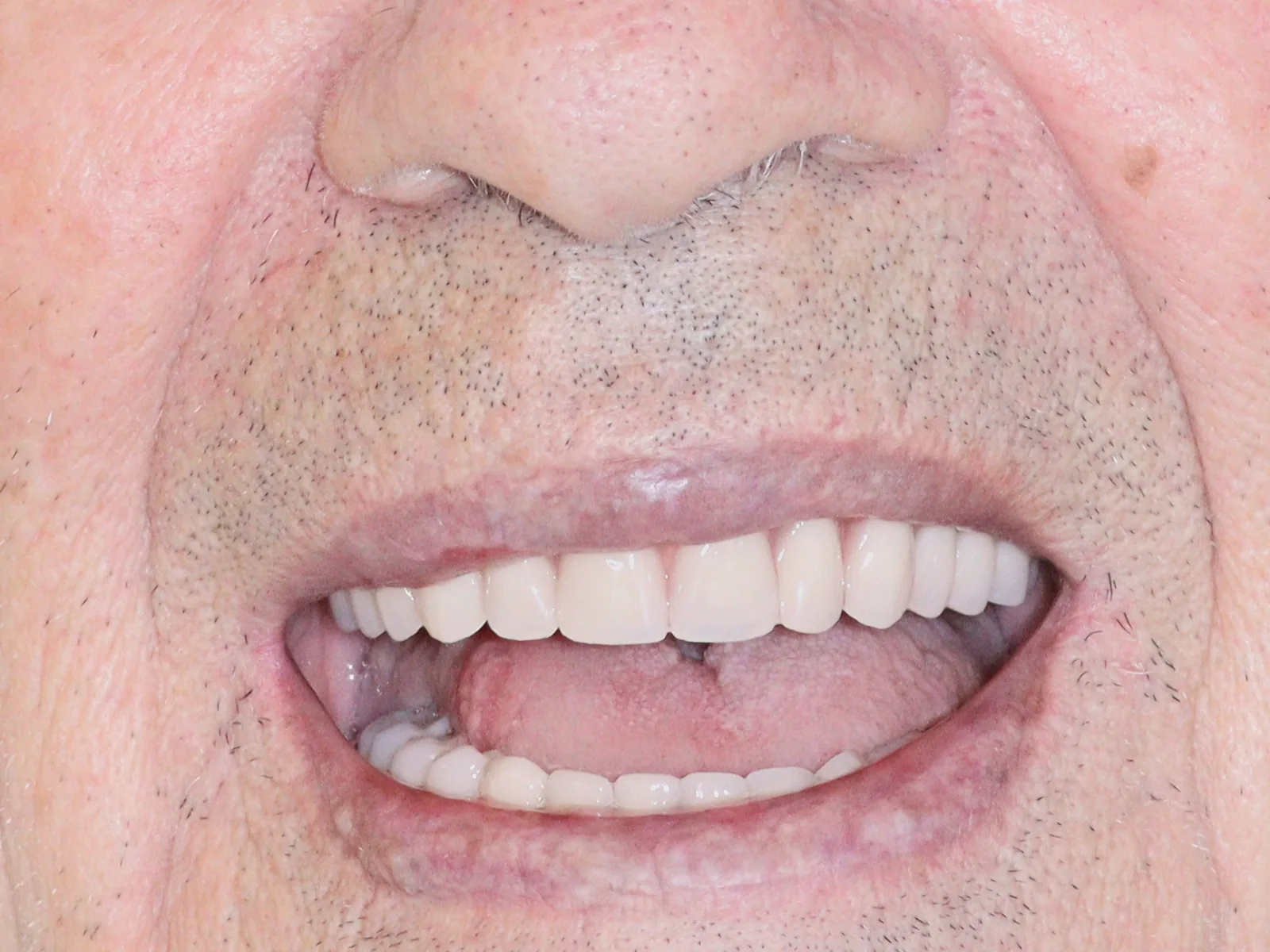
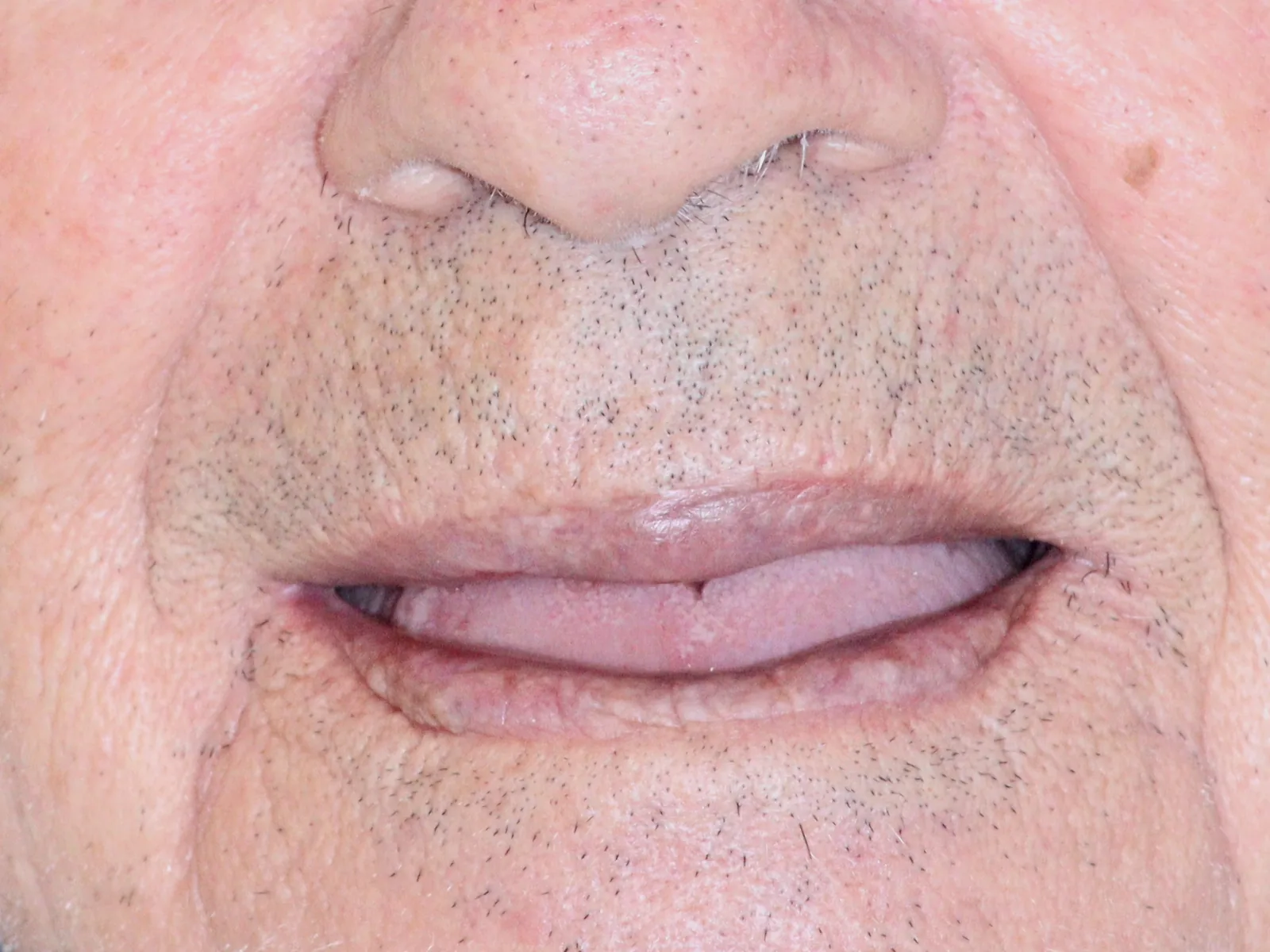
Real photographs, aligned and cropped so they can be compared. Every case is different and results cannot be guaranteed.
Frequently asked questions
The questions we are asked most about this treatment, answered clearly.
Valencia · Carmen Fontes Clinic
No waiting lists. Your first visit includes a digital diagnosis.
Contact us directly
Tell us about your case. We reply within 24 hours, in English.
Phone
667 997 059
info@clinicacarmenfontes.com
Address
Pg. de les Facultats, 6, bajo derecha, Algirós, 46021 València, Valencia
Opening hours
We use our own and third-party cookies for analytics and marketing. You can accept, reject or configure them. More information in our cookie policy (in Spanish).